The Five Pillars of Good Executive Health
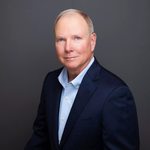
The CEO Daily Briefing had an article from Dan Bigman which asked a powerful question: What handful of things most positively impact a successful executive’s health – and even more importantly – “health span?” He wrote: “The health of a CEO is not just a personal matter. It’s a business one.” He’s right!
Please tune in this week as Wayne passes along the advice of Dr. Ryan Hurt of the Mayo Clinic Executive Health Program. What are his recommendations for achieving longer health span? How do you view his approach? Please share your thinking with me at [email protected].
Along with focusing on a health span for yourself, encouraging a healthy life span for the leaders you're building right now is essential too. The next generation of construction executives won't just need to know how to manage projects, lead teams and drive profitability; they need to sustain the energy, clarity and resilience to do it for the long haul. That's exactly what The Contractor Business Boot Camp is designed to develop.
It is a unique leadership development program built for rising construction leaders who are ready to step up, but need the focused development to get there faster and stronger. We push them on not only the skills that matter: decision-making under pressure, communication, financial acumen, but also the habits and mindset that sustain peak performance over a career. The last class for 2026 starts in November in Charlotte. And, seats are filling up fast. Contact Charlotte today at [email protected] to find out more.
(DESCRIPTION)
Logo, Performance Construction Advisors
Logo drops into the middle of a blue screen.
Host Wayne Rivers appears in front of a white screen and talks to the camera.
On screen text, Wayne Rivers, Performance Construction Advisors
(SPEECH)
WAYNE RIVERS: Hi everyone, this is Wayne Rivers at Performance Construction Advisors, where We Build Better Contractors.
This week I want to talk about the five pillars of executive health. "Oh, well, that sounds kind of a big deal. Wayne, are you a doctor now?" No, I'm not. But this comes from an article from the CEO Briefing in July of '26 by Dan Bigman and he interviewed the head of Mayo Executive Health, Dr. Ryan Hurt. And so Dr. Hurt laid out his five main pillars for what we as senior leaders in companies should be doing to focus on maximizing our health.
He made a great point in this article, Dr. Hurt, that is, "The health of a CEO is not just a personal matter, it's a business one." And that's so true. I'm not talking about death and dying here, I'm talking about just being only 80% of who you could be or 60% of who you could be because of diet or poor exercise or poor something. So that's a great point. It's not just a personal matter. It's a family matter, and it's also a business matter because so many people depend on you and your position of responsibility. So here's Dr. Hurt, "What about this is important to you?" Come on. A little bit self-explanatory there.
He started off talking about health span. Where did we talk about health span before? Outlive, Dr. Peter Attia. We talked about that last year in a blog. And health span is simply health plus longevity. We think about longevity, "Boy, I want to live to be 100," but ideally you want to live to be a healthy 100. You don't want the last 10 years of your life to be miserable, physically or mentally incapable of doing the things you want to do. We're all going to have some decline at some point, but you want that to be the last one year of your life or the last 18 months of your life, not the last decade of your life. So health span encompasses staying healthy. Living a long time, yes, but also staying healthy and active during that period of time.
So number one, what does Dr. Hurt focus on? He says that we're too often influenced by our peer network. And he gives an example. Somebody came to him and they said, "Oh my gosh, I want a screen for pancreatic cancer because my friend just was diagnosed and it's not good." And he said, "Well, yeah, but that's your friend. That's not you. Your physiology's completely different. Your habits are completely different. We can do a screen for that, but why don't we talk about it some and then get focused on what you might need in terms of other things as well. We can search for that one potential malady, but why not do a holistic review of you individually?" So yes, it's important to be informed, yes, it's important to stay in touch with your peers, but at the same time, their health is not your health. You could be quite different indeed.
Second thing, he says very simply, this is a quote, "The key to longevity is muscle." Wow, I've never heard it stated that way before. And I don't think he's talking about being a bodybuilder here, he's just talking about being able to do the things, same as Dr. Attia. Being able to lift up your bag on an airplane and put it into the overhead compartment without strain. That's the kind of stuff that you want to be doing when you're advancing in age, as some of us are. He said that you need strength training. I'm not talking about running, I'm not talking about cardio training. Strength training specifically, 90 to 120 minutes a week.
He gives three specific things, strength training, diet and sleep, and I'm talking to my wife, and I'm over three here. My batting average is not good, but trying is better than not trying. So 90 to 120 minutes a week. And then he talks about simple things like, "Okay, you have a hard time getting to the gym because of your schedule. Keep some dumbbells in your office. And when you've got five minutes between meetings, do some stuff so that you're using your downtime ..." To the degree that contractors have any downtime, you're using your downtime effectively to get towards that 90 or 120 minutes a week.
The third thing is diet. And he says, "We probably don't get enough protein in our diets." And so he gave a formula, 1.2 grams of protein for every kilogram of body weight. So I had to get my calculator out and figure all this stuff out because he's not talking about pounds, he's talking about kilograms. So for me, I weigh about 75 kilograms, 165 pounds. 75 kilograms. So that means I need to be eating about 90 grams of protein a day. So I go to my wife, "Lisa, are we eating 90 grams of protein a day?" She goes, "Heck no. There's no way we're eating that much protein." 0 for 2. Okay, but that's a goal to shoot for, getting more protein into your diet to support that strength building that you're doing.
The third ... I'm sorry, the fourth thing is sleep. Seven to eight hours of sleep per night. Now, I've met so many contractors and they're like, "Man, I get about five hours of sleep a night. I'm fine." Dr. Hurt said that works for about 1% to 2% of the population. The rest of us need seven to eight hours of sleep per night. He did say that executives in particular are ... What's the right word, troubled, by insomnia. Maybe there's an epidemic of insomnia, because you wake up in the middle of the night and you're thinking, "I've got to get that presentation ready. I've got this big meeting coming up and I don't feel like I'm 100% prepared." And so the wheels start spinning in the middle of the night and it's a big barrier to getting effective sleep. So that's a real thing for CEOs.
And then the fifth thing he says is, "Have a good family medical practice. Not the kind where you go in and the doctor can only spend five minutes with you because he's got to see 100 patients a day." In that case, you're going to come in, he's going to say, "What's the problem?" He's going to take your temperature, do the basics, and he's going to write you a prescription and then he's out. He's talking about having a proactive medical practice. So Lisa and I, years ago now, joined a concierge practice. And we still have to go to specialists and sometimes I've been to the emergency room. Same stuff that we all go through. But now it's a completely different relationship with our doctor. You go in and Steve spends an hour with us and we talk about all kinds of things. "What's going on at home? How are the kids doing?" All this other stuff that relates to your health and informs your health, but it isn't your temperature, it isn't prescription for A, B or C.
That really was an eye-opener for us. It's not very expensive either. I thought it would be tens of thousands to do this, but it's really not. So, those of you who are watching these vlogs are pretty successful people. You can probably afford this kind of medical care. So get a really good family practitioner. That's the quarterback of your team. And if you need a cardiologist, he'll have one that he can recommend. Or you need another specialty, that'll be a part of the deliverable.
So those are the five things that Dr. Hurt talks about that we need to be focused on as executives for good long-term health and health span. What did we miss? Share it with us. [email protected].
This is Wayne Rivers at PCA, where We Build Better Contractors.
(DESCRIPTION)
On screen text, Wayne Rivers, Performance Construction Advisors Performance Construction Advisors logo drops into the middle of a blue screen.


